


Our Facilities
TTS provides access to state-of-the-art laboratories, testing infrastructure and specialised electrical engineering equipment across UNSW.
Combined with TTS’s engineering expertise, these facilities enable organisations to test, validate and accelerate technology development using capabilities that would otherwise require significant capital investment.
Power Hardware in the Loop (pHIL)
Testing capability up to 50 kW
Validate power electronic equipment such as inverters, converters, and motor drives under realistic operating conditions. pHIL testing enables safe assessment of grid synchronisation, control performance and overall system behaviour across a wide range of operating scenarios without impacting the electricity network.
Our pHIL testing capability is supported by over $270,000 worth of specialised equipment.
2 x
Cinergia SiC AC/DC Power Amplifiers
Device Under Test (DUT)
1 x
Yokogawa Oscilloscope
1 x
UNSW Motor Drive
Laboratory
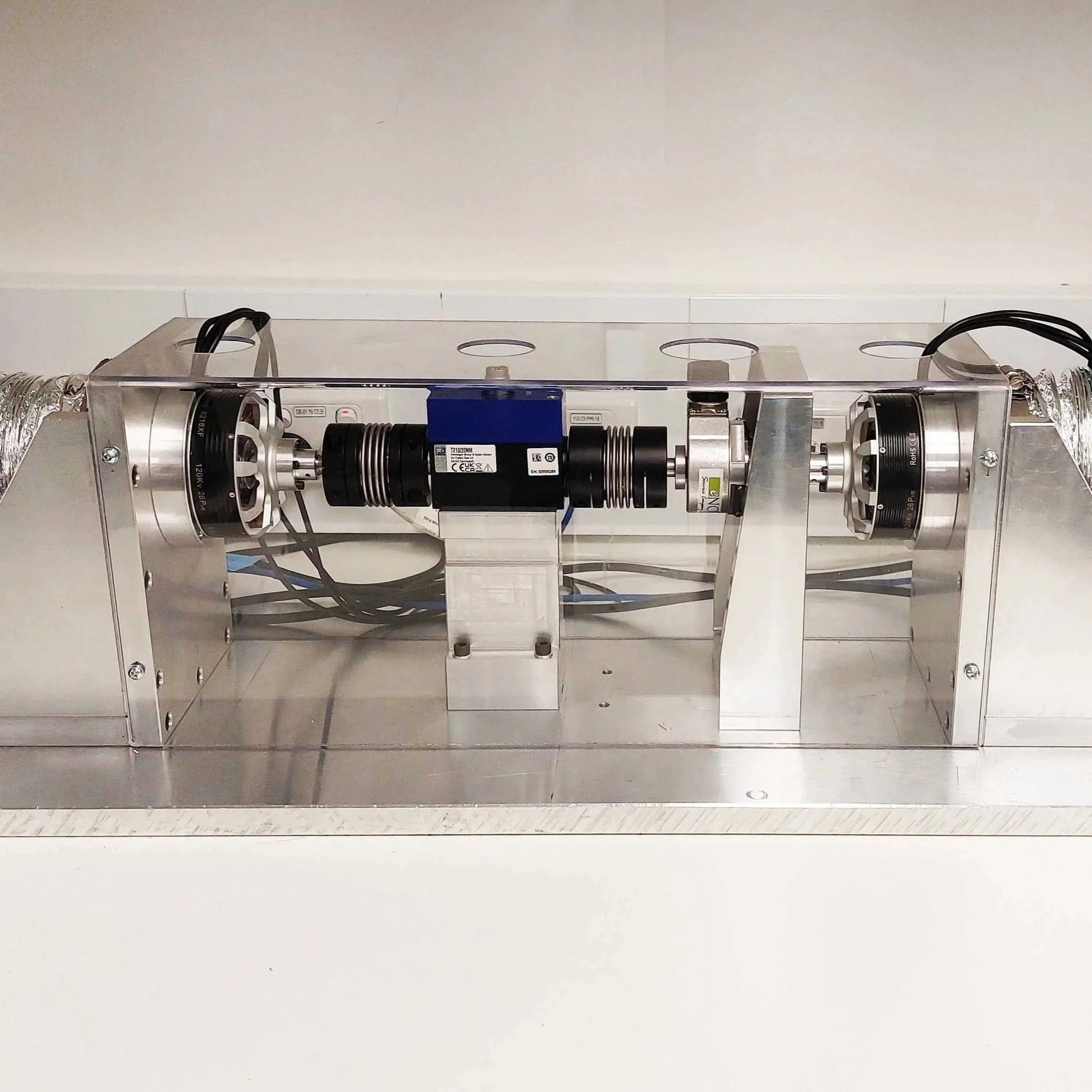
Motor Dynamometer (Dyno) Testing
Our high-accuracy dyno testing setup enables TTS to evaluate electric motors used in applications ranging from e-mobility systems to drones. We can generate and analyse full efficiency maps across a motor's rated speed and torque range, measure key motor parameters such as inductance and assess thermal performance under different operating conditions.
The facility also enables load cycle emulation based on real-world operating profiles allowing energy consumption and performance to be evaluated before deployment. The resulting data helps inform motor selection, traction drive design, and overall system optimisation.
2 x
Motor Drive Controllers (each 120 V, 125 - 400 A output)
1 x
dSPACE MicroLabBox II
1 x
Together with our drone propulsion system testing setup, the UNSW Motor Drive Laboratory utilises close to $250,000 in specialised equipment.
Yokogawa WT1800 Power Analyser
1 x
HBM Torque Transducer
1 x
High-accuracy Incremental Encoder
1 x
High Bandwidth High-accuracy Oscilloscope and associated current and voltage probes
UNSW Motor Drive Laboratory
Drone Propulsion System Testing
Our drone propulsion system testing facility located within UNSW’s Motor Drive Laboratory enables the evaluation of complete propulsion systems including the propeller, motor and drive. Testing is conducted under static airflow conditions.
The facility measures propulsion efficiency in terms of grams of thrust per watt of electrical power consumed.
1 x
1 x
dSPACE MicroLabBox II
1 x
Yokogawa Power Analyser
Electronic Speed Controllers (ESCs)
High Bandwidth High-accuracy Oscilloscope and associated current and voltage probes
1 x
Power Electronics Design, Validation & Verification
TTS and the broader UNSW network have extensive experience supporting the design, testing and validation of electronics and power electronic systems including control boards, inverters and DC/DC converters ranging from low-power applications through to multi-kilowatt systems.
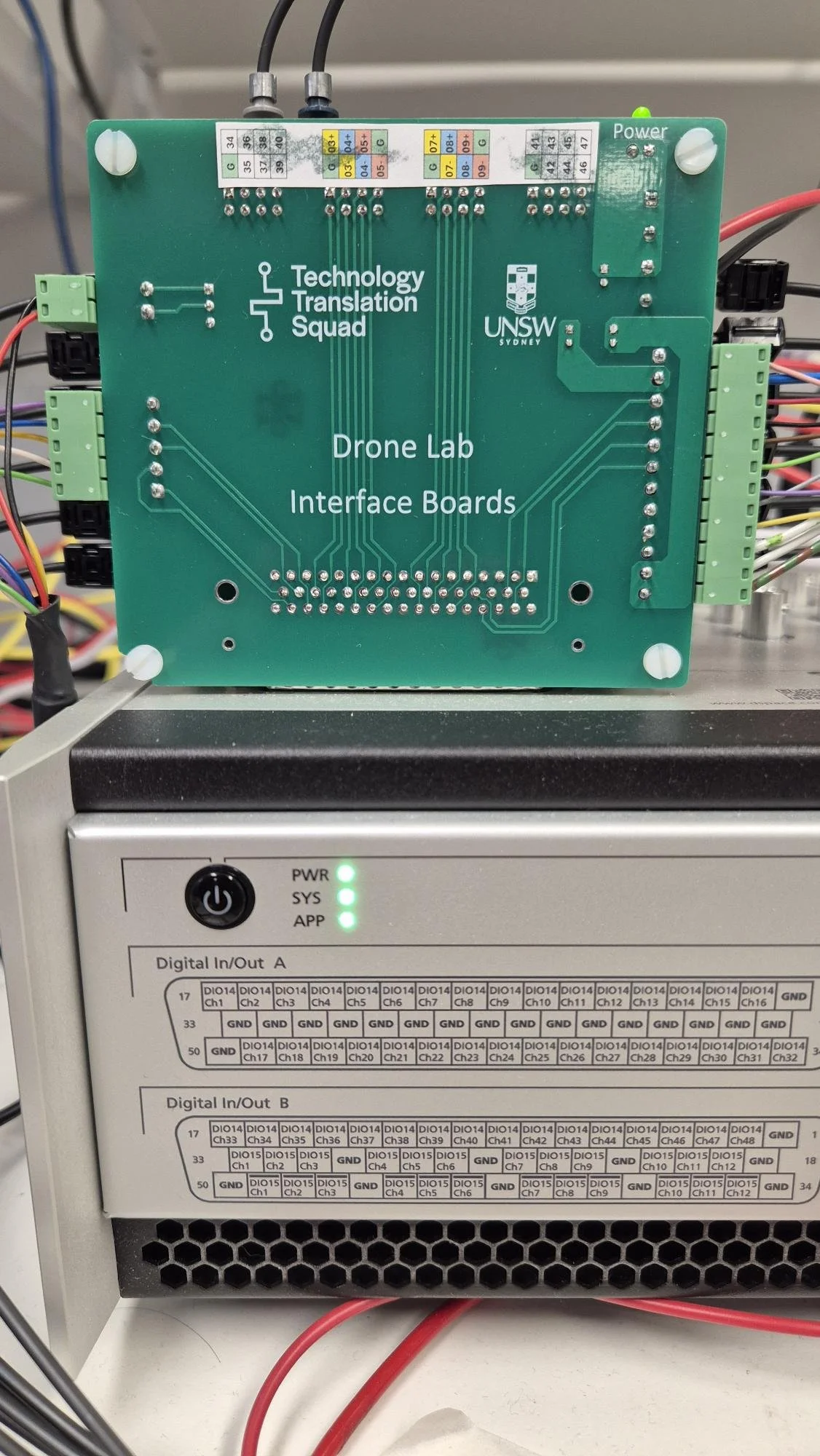
This capability leverages over $150,000 in advanced power electronics design, measurement and validation tools.
1 x
1 x
High Bandwidth High-accuracy Oscilloscope and associated current and voltage probes
1 x
Altium Designer License
Yokogawa Power Analyser
Additional Capabilities
Access advanced electrical testing and measurement equipment via a project with TTS. Some of the additional capabilities include:
Precision voltmeters, ohmmeters and ammeters
Arbitrary waveform function generators
Frequency counters
Precision power analysers
High amperage current probes
Isolated voltage probes
Precision LCR meters
Motor drive testing units
High voltage AC and DC supplies and loads
Multi-channel dSPACE interfaces
TTS is expanding its testing capabilities through the development of a high-accuracy power meter, expected to be available in early 2027. The platform will combine high-bandwidth voltage and current sensing with fast sampling rates to support advanced load monitoring and protection.
Other Facilities
Beyond our own test and measurement capabilities we can arrange for the use of facilities from other faculties and departments across UNSW.
Do you require access to specialised electrical equipment as part of your decarbonisation project?